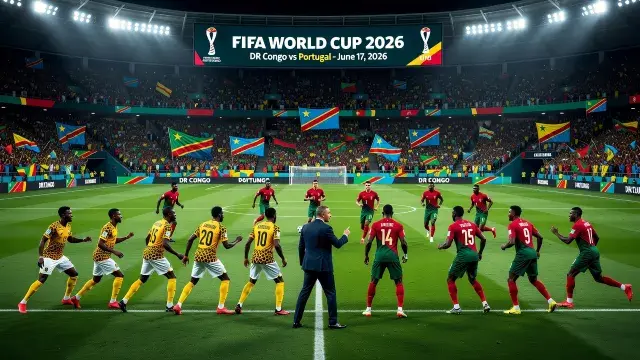
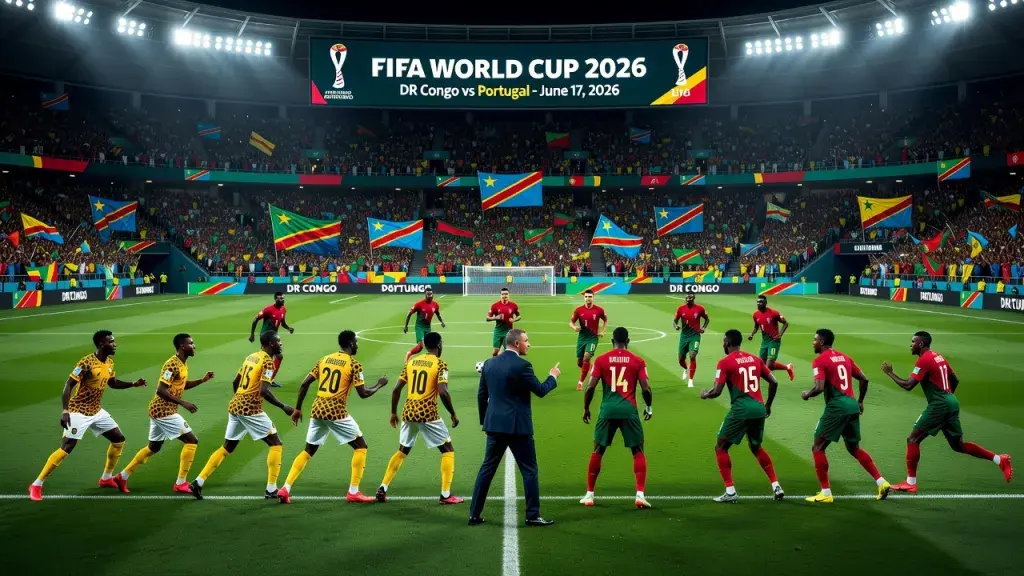
The Democratic Republic of the Congo will return to the FIFA World Cup on June 17, 2026, facing Portugal in their group stage opener - a fixture that carries the weight of more than half a century of absence and the ambition of a generation determined to leave a different mark. For a country that last appeared on football's grandest stage in 1974, the moment is not simply a return to competition. It is a reckoning with history and a declaration of intent.
That 1974 campaign, contested under the name Zaire, remains one of the most painful chapters in African football history. Three defeats, 14 goals conceded, none scored - a brutal introduction to the World Cup that left a wound the continent's footballing community never fully forgot. It took 52 years for the Leopards to qualify again, and the road back has been long enough that even reaching this point carries significance beyond the sport itself. Sébastien Desabre's squad is acutely aware of what came before, and that awareness shapes everything about their preparation. Across the football world, fans and analysts tracking multiple tournaments - from Europe's elite competitions to regional leagues like the qatar qbl - understand that returns to major stages after extended absences rarely arrive without extraordinary backstory, and Congo's is among the most compelling in this World Cup cycle.
Desabre has built his side around a clear tactical identity: defensive compactness, disciplined shape, and the ability to transition quickly through the pace of his wide and forward players. The squad does not carry the collective top-league experience that Portugal or other established nations bring to a tournament, but it is not without quality or leadership. Chancel Mbemba, who has spent years operating at a high level in European club football, anchors the backline with the kind of authoritative presence DR Congo have needed. Up front, Cédric Bakambu provides a focal point in attack - experienced, composed, and capable of holding the ball when the team needs to absorb pressure and build. Behind him, Yoane Wissa and Meschack Elia offer direct running and the unpredictability that can unsettle any defence, regardless of reputation.
The Opponent: Portugal at the Height of Their Powers
Portugal arrive at this World Cup as the reigning UEFA Nations League champions and among the tournament's most feared attacking sides. Cristiano Ronaldo aside, the squad has evolved into something broader and more balanced, with depth across every line and a generation of technically gifted players capable of dismantling organised defences. For DR Congo, the opening fixture represents an immediate examination of just how far they have come - and how capable their new process genuinely is against elite opposition. Desabre will not be naive about the gap in resources and experience, but a compact defensive structure and a swift counter-attacking approach gives the Leopards a theoretical framework to compete, even if results remain difficult to predict.
A Possible Lineup Built on European Experience
The expected starting eleven gives a reasonable indication of Desabre's thinking. Lionel Mpasi is likely to start in goal, protected by a back four of Gédéon Kalulu, Chancel Mbemba, Dylan Batubinsika and Arthur Masuaku. The midfield axis of Samuel Moutoussamy, Charles Pickel and Edo Kayembe will be tasked with controlling transitions and providing cover. Meschack Elia and Yoane Wissa are expected to operate on the flanks, with Bakambu leading the line. The majority of these players are active in European leagues, which gives the squad a degree of tactical coherence and a familiarity with high-tempo, structured football that the 1974 generation - facing entirely different circumstances - never had access to.
What This Moment Means for African Football
DR Congo's return matters well beyond their own borders. The continent sends a competitive and increasingly diverse group of nations to each World Cup cycle, and the Leopards' qualification adds another dimension to Africa's representation in 2026. A strong showing - or even a competitive performance against Portugal - would resonate across a continent watching with genuine pride and expectation. The Leopards are not arriving to make up the numbers. They are arriving with a point to prove, a half-century of absence to account for, and a squad that, on its best day, is capable of making an opening group match genuinely uncomfortable for one of Europe's elite. How the story unfolds from June 17 will depend on execution, temperament, and whether Desabre's system holds under the weight of the moment - but the narrative is already written. Congo are back, and they intend to be remembered differently this time.